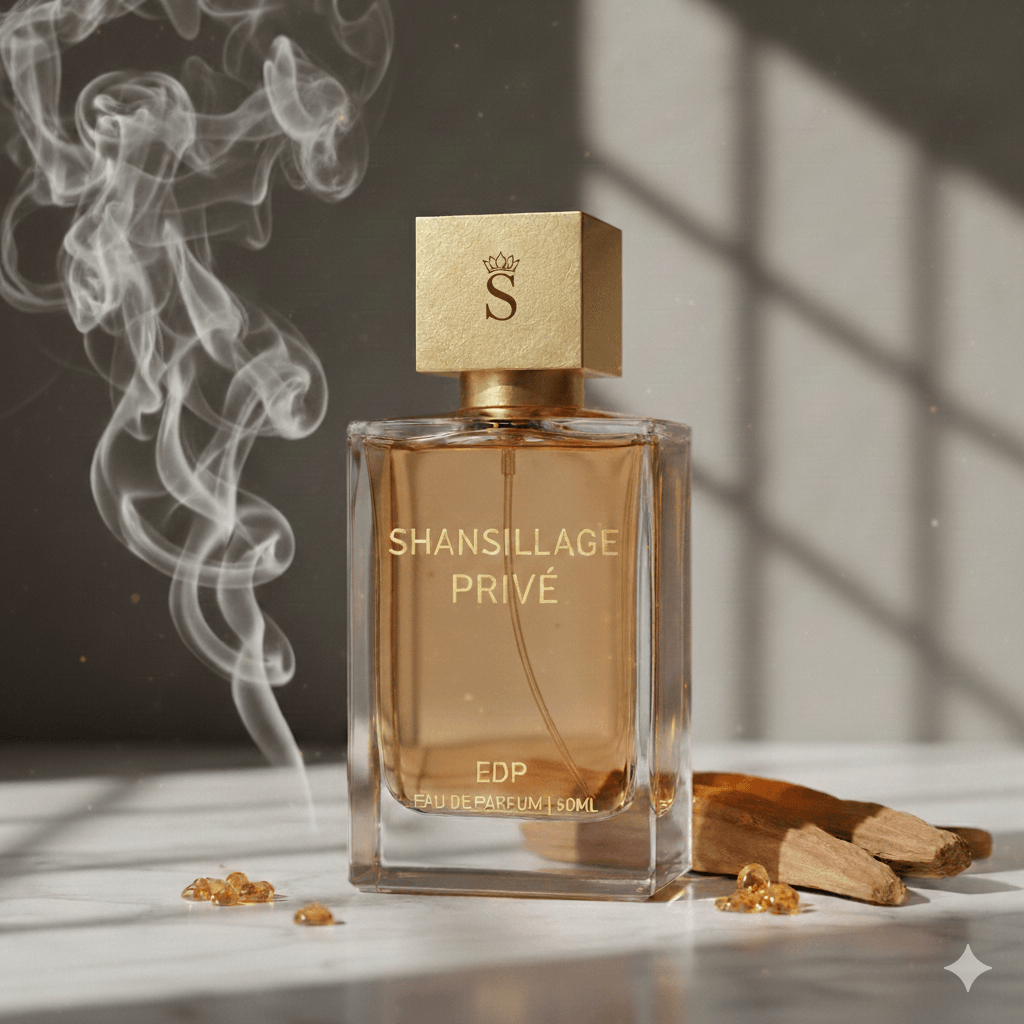
How to Choose Your Signature Perfume
A signature scent isn't the fragrance you wear most often—it's the one people associate with you before they see you. Finding it takes more than reading a description or liking a bottle in a shop window. It takes understanding fragrance families, testing correctly, and being honest about how a scent actually behaves on your skin over the course of a day.

SHANSILLAGE Editorial Team
Reviewed for accuracy · Last updated 3 July 2026
Start With Fragrance Families, Not Bottles
Before comparing individual perfumes, it helps to understand the broad families they belong to. Nearly every fragrance falls into one or more of these categories, and knowing your leanings narrows the field dramatically.
Citrus & Fresh
Bergamot, lemon, grapefruit. Bright and energizing, but shortest-lived of the major families—ideal for daytime and warm climates.
Floral
Rose, jasmine, iris, tuberose. The largest and most versatile family, ranging from soft and powdery to intensely heady.
Woody
Sandalwood, cedar, vetiver. Grounding and long-wearing, often used as a base that other families build on top of.
Oriental & Amber
Vanilla, amber, resins, spice. Warm and enveloping, with strong presence and excellent longevity—best suited to cooler months and evenings.
Gourmand
Vanilla, caramel, praline, cocoa. Edible-adjacent and comforting, popular in modern niche perfumery but easy to overwear if too sweet.
Most people don't belong to a single family—they lean toward two, such as floral-woody or citrus-oriental. Our guide to perfume notes breaks down how these families build from top to base.
What Your Fragrance Choices Say About Personality
Scent preference tends to correlate with how people want to be perceived, not necessarily who they are. It's a useful starting lens, though never a rule:
- Citrus and green lovers often gravitate toward clarity and low-maintenance elegance—understated but precise.
- Floral wearers tend to favor warmth and approachability, with a wide range from soft to statement-making.
- Woody and oriental wearers frequently want to project confidence and depth, favoring presence over subtlety.
- Gourmand wearers often seek comfort and familiarity, choosing scents that feel personal rather than performative.
How to Actually Test a Perfume
Most people test perfume incorrectly, judging a fragrance on the first thirty seconds off a paper strip. That's a mistake—the true character of a perfume only emerges over hours, on skin.
- Test no more than three scents per session. Beyond that, your nose fatigues and everything starts to blur together.
- Spray on skin, not just paper. Paper strips show the raw formula; skin shows how it interacts with your own chemistry.
- Wait at least four hours before forming an opinion. The opening notes are a preview, not the performance.
- Test in the context you'll wear it. A scent tested in an air-conditioned store can behave very differently in heat, humidity, or a closed office.
💡 Pro tip: If a fragrance still feels right on day three of testing, not just day one, it's a strong signal you've found something worth committing to. See our guide on applying perfume correctly to test fairly.
Day Fragrances vs Evening Fragrances
A single signature scent can work everywhere, but many people build a small, deliberate rotation instead—one for daylight hours, one for evening.
Seasonal Recommendations
Temperature changes how fragrance molecules evaporate, so what feels perfect in December can feel heavy in June, and vice versa.
- Summer: Citrus, aquatic, and light floral compositions stay fresh without becoming cloying in heat.
- Monsoon: Humidity amplifies sillage—lighter application of woody-green scents avoids overwhelming shared spaces.
- Winter: Cold, dry air mutes projection, making it the ideal season for rich amber, oud, and gourmand fragrances.
- Transitional seasons: Floral-woody blends offer the most flexibility as temperatures shift.
Niche vs Designer: What Actually Matters
The niche-versus-designer debate is often framed as a quality distinction, but the real difference usually comes down to concentration, ingredient sourcing, and distribution scale rather than any inherent superiority.
- Niche houses often work with smaller batches and unconventional materials, prioritizing distinctiveness over mass appeal.
- Designer perfumes are built for broader wearability, but a well-formulated designer Eau de Parfum can rival niche performance at a fraction of the cost.
- What matters most is concentration and ingredient quality, not the label on the box. Our Privé collection was built around this principle—18%+ concentration without niche-level pricing.
Expert Tips
- Don't buy a fragrance because it smells good on someone else—skin chemistry changes the result more than most people expect.
- If you're drawn to a note (say, sandalwood or bergamot), try three different interpretations of it before assuming you dislike the whole family.
- Photograph or note the exact concentration and batch when you find a favorite—reformulations happen, and it helps you track changes over time.
- A true signature scent should feel like an extension of you, not a costume—if it feels like "trying too hard," it's probably not the one.
Key Takeaways
- Start with fragrance families, not individual bottles, to narrow your search efficiently.
- Always test on skin and wait at least four hours before judging a fragrance.
- Day and evening fragrances often differ—consider a small rotation rather than one scent for everything.
- Adjust seasonally: lighter in heat and humidity, richer in cold, dry air.
- Concentration and ingredient quality matter more than whether a perfume is niche or designer.
Frequently Asked Questions
How long should I test a perfume before buying it?
Wear it on skin for at least four to six hours, ideally through a full day, to judge how the top, heart, and base notes evolve rather than relying on the initial spray.
Can I have more than one signature scent?
Yes. Many people rotate two or three fragrances suited to different contexts, such as a lighter day scent and a richer evening fragrance, rather than relying on a single bottle.
Is niche perfume always better than designer perfume?
Not necessarily. Niche houses often use higher concentrations and more unusual materials, but quality designer Eau de Parfum can match performance at a lower price. The right choice depends on the formula, not the label.
A signature scent isn't found in a single visit to a counter—it's the fragrance that still feels right after weeks of wear, in every season and setting you actually live in.
Find Your Signature Scent
Explore Privé, our 18%+ Eau de Parfum built for exceptional longevity and sillage across every season.
Discover Privé